
Activity 3.11:
Determining the empirical formulae
[Relative atomic mass: H = 1, C = 12, O = 16, Cl = 35.5, K = 39, Br = 80, Sn = 119, I = 127]
1. A sample of potassium bromide contains 6.24 g of potassium and 12.8 g of bromine. What is the empirical formula of potassium bromide?
2. A sample of 26.1 g of tin chloride contains 11.9 g of tin. State the empirical formula of the tin chloride.
3. 0.03 mol of element Y combines with 7.62 g of iodine to produce an iodide salt. State the empirical formula of the iodide salt.
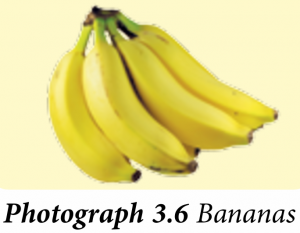
4. A chemist analysed the compound that gives smell to fully ripe bananas. He found that the compound contains 64.62% carbon, 10.77% hydrogen and 24.61% oxygen. What is the empirical formula of that compound?
Answer:
1. KBr
2. SnCl4
3. YI2
4. C7H14O2
Determining the empirical formulae
[Relative atomic mass: H = 1, C = 12, O = 16, Cl = 35.5, K = 39, Br = 80, Sn = 119, I = 127]
1. A sample of potassium bromide contains 6.24 g of potassium and 12.8 g of bromine. What is the empirical formula of potassium bromide?
2. A sample of 26.1 g of tin chloride contains 11.9 g of tin. State the empirical formula of the tin chloride.
3. 0.03 mol of element Y combines with 7.62 g of iodine to produce an iodide salt. State the empirical formula of the iodide salt.
4. A chemist analysed the compound that gives smell to fully ripe bananas. He found that the compound contains 64.62% carbon, 10.77% hydrogen and 24.61% oxygen. What is the empirical formula of that compound?
Answer:
1. KBr
2. SnCl4
3. YI2
4. C7H14O2