Experiment 2A (Comparing Alkane and Alkene):
A. Sootiness of Flame
Aim: To compare hexane, C6H14 and hexene, C6H12 for sootiness of flames during combustion.
Problem statement: Do alkanes and alkenes burn with the same quantity of soot?
Hypothesis: Hexene, C6H12 burns with a more sooty flame compared to hexane, C6H14.
Variable:
(a) Manipulated variable : Hexane, C6H14 and hexene, C6H12.
(b) Responding variable : Sootiness of flames.
(c) Constant variable : Volume of hexane, C6H14 and hexene, C6H12.
Materials: Hexane, C6H14, hexene, C6H12, wooden splinter, matches and filter paper.
Apparatus: Evaporating dish and measuring cylinder.
Procedure:
1. Pour 2 cm3 of hexane, C6H14 into an evaporating dish.
2. Use a lighted wooden splinter to ignite hexane, C6H14.
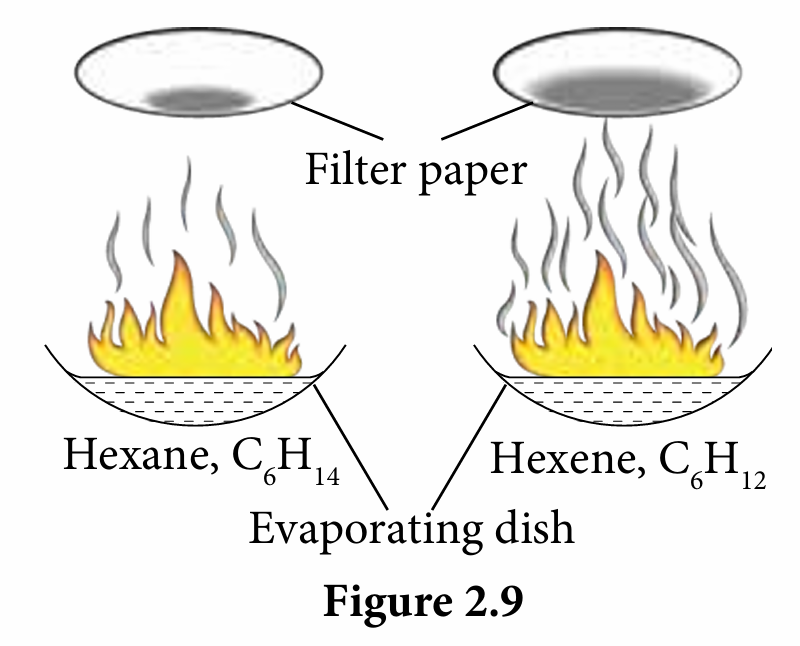
3. When hexane, C6H14 starts to burn, place a piece of filter paper above the flame as shown in Figure 2.9.
4. Repeat steps 1 to 3 using hexene, C6H12 to replace hexane, C6H14.
5. Record the observation of the sootiness of the flame and the quantity of soot formed on the filter paper.
B. Reaction with Bromine Water, Br2
Aim: To compare hexane, C6H14 and hexene, C6H12 using bromine water, Br2.
Hypothesis: Hexene, C6H12 decolourises the brown colour of bromine water, Br2 while hexane, C6H14 does not decolourise the brown colour of bromine water, Br2.
Variable:
(a) Manipulated variable : Hexane, C6H14 and hexene, C6H12.
(b) Responding variable : Colour change of bromine water, Br2.
(c) Constant variable : Volume of hexane, C6H14 and hexene, C6H12.
Materials: Hexane, C6H14, hexene, C6H12 and bromine water, Br2 in 1,1,1-trichloroethane, CH3CCl3.
Apparatus: Test tube, measuring cylinder and dropper.
Procedure:
1. Pour 2 cm3 of hexane, C6H14 into a test tube.
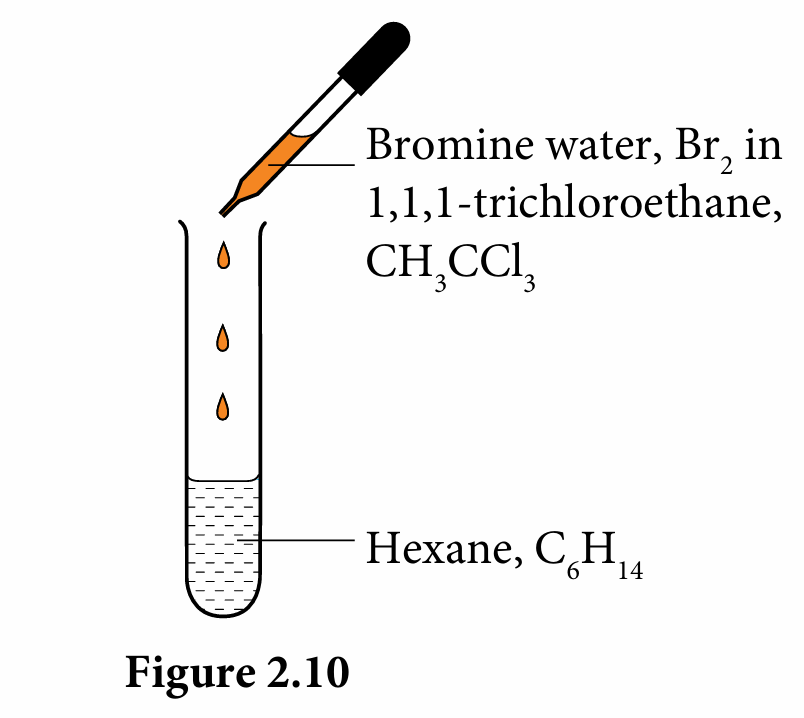
2. Add 2 – 3 drops of bromine water, Br2 in 1,1,1-trichloroethane, CH3CCl3 to hexane, C6H14 as shown in Figure 2.10.
3. Shake the mixture.
4. Record all observations.
5. Repeat steps 1 to 4 using hexene, C6H12 to replace hexane, C6H14.
C. Reaction with Acidified Potassium Manganate(VII), KMnO4 Solution
Aim: To compare hexane, C6H14 and hexene, C6H12 using acidified potassium manganate(VII), KMnO4 solution.
Hypothesis: Hexene, C6H12 decolourises the purple colour of acidified potassium manganate(VII), KMnO4 solution while hexane, C6H14 does not decolourise acidified potassium manganate(VII), KMnO4 solution.
Variable:
(a) Manipulated variable : Hexane, C6H14 and hexene, C6H12.
(b) Responding variable : Colour change of acidified potassium manganate(VII), KMnO4 solution.
(c) Constant variable : Volume of hexane, C6H14 and hexene, C6H12.
Materials: Hexane, C6H14, hexene, C6H12 and acidified potassium manganate(VII), KMnO4 solution.
Apparatus: Test tube, measuring cylinder and dropper.
Procedure:
1. Pour 2 cm3 of hexane, C6H14 into a test tube.
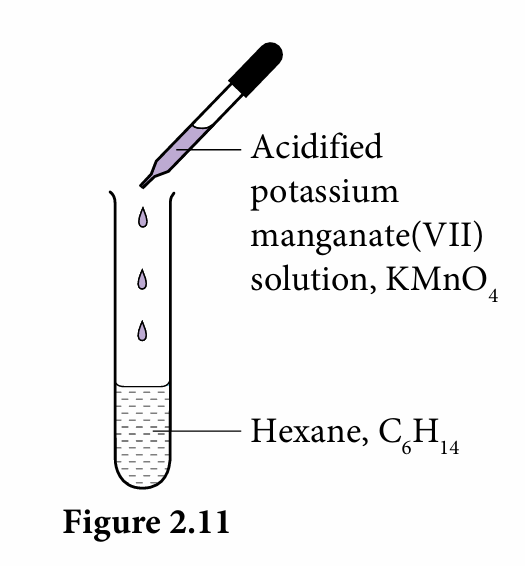
2. Add 2 – 3 drops of acidified potassium manganate(VII), KMnO4 solution to hexane, C6H14, as shown in Figure 2.11.
3. Shake the mixture.
4. Record all the observations.
5. Repeat steps 1 to 4 using hexene, C6H12 to replace hexane, C6H14.
Observation:
Construct a table to record your observations.
Discussion:
1. (a) Based on your observations, compare the sootiness of flames of hexane, C6H14 and hexene, C6H12.
(b) Calculate the percentage of carbon by mass per molecule in hexane, C6H14 and hexene, C6H12.
(c) State the relationship between the percentage of carbon by mass per molecule in hexane, C6H14 and hexene, C6H12, and the sootiness of the flames.
2. (a) Suggest two reagents that can be used to distinguish between hexane, C6H14 and hexene, C6H12.
Explain your answer.
(b) Explain the difference in reactivity of hexane, C6H14 and hexene, C6H12 in terms of chemical bonds in their molecules.
3. What is the operational definition of unsaturated hydrocarbons in this experiment?
Answer:
1. (a) Hexene burns with more soot than hexane.
1. (b)
$$ \begin{aligned} & \% C \text { in hexane }=\frac{6(12)}{6(12)+14(1)} \times 100 \%=83.72 \% \\ & \% C \text { in hexene }=\frac{6(12)}{6(12)+12(1)} \times 100 \%=85.71 \% \end{aligned} $$
1. (c) The higher the percentage of carbon by mass per molecule, the more soot is produced by the flame.
2. (a)
– Acidic solution of potassium manganate (VII)
– Bromine water
– Hexane does not decolourise the brown colour of bromine water but hexene decolourises the brown colour of bromine water.
– Hexane does not decolourise the purple colour of acidified potassium manganate (VII) solution, but hexene decolourises the purple colour of acidified potassium manganate (VII) solution.
2. (b)
– Hexane is a saturated hydrocarbon that contains a single covalent bond between carbon atoms. The addition reaction does not occur when an acidic solution of potassium manganate (VII) is added.
– Hexene is an unsaturated hydrocarbon that contains a double covalent bond between carbon atoms, -C=C- . The addition reaction occurs when an acidic solution of potassium manganate (VII) is used to produce hexanadiol.

3. When bromine water is dripped into liquid hydrocarbon, the brown colour of bromine water decolourises/ When an acidic solution of potassium manganate (VII) is dripped into the hydrocarbon, the purple colour of potassium manganate (VII) decolourises.
A. Sootiness of Flame
Aim: To compare hexane, C6H14 and hexene, C6H12 for sootiness of flames during combustion.
Problem statement: Do alkanes and alkenes burn with the same quantity of soot?
Hypothesis: Hexene, C6H12 burns with a more sooty flame compared to hexane, C6H14.
Variable:
(a) Manipulated variable : Hexane, C6H14 and hexene, C6H12.
(b) Responding variable : Sootiness of flames.
(c) Constant variable : Volume of hexane, C6H14 and hexene, C6H12.
Materials: Hexane, C6H14, hexene, C6H12, wooden splinter, matches and filter paper.
Apparatus: Evaporating dish and measuring cylinder.
Procedure:
1. Pour 2 cm3 of hexane, C6H14 into an evaporating dish.
2. Use a lighted wooden splinter to ignite hexane, C6H14.
3. When hexane, C6H14 starts to burn, place a piece of filter paper above the flame as shown in Figure 2.9.

4. Repeat steps 1 to 3 using hexene, C6H12 to replace hexane, C6H14.
5. Record the observation of the sootiness of the flame and the quantity of soot formed on the filter paper.
B. Reaction with Bromine Water, Br2
Aim: To compare hexane, C6H14 and hexene, C6H12 using bromine water, Br2.
Hypothesis: Hexene, C6H12 decolourises the brown colour of bromine water, Br2 while hexane, C6H14 does not decolourise the brown colour of bromine water, Br2.
Variable:
(a) Manipulated variable : Hexane, C6H14 and hexene, C6H12.
(b) Responding variable : Colour change of bromine water, Br2.
(c) Constant variable : Volume of hexane, C6H14 and hexene, C6H12.
Materials: Hexane, C6H14, hexene, C6H12 and bromine water, Br2 in 1,1,1-trichloroethane, CH3CCl3.
Apparatus: Test tube, measuring cylinder and dropper.
Procedure:
1. Pour 2 cm3 of hexane, C6H14 into a test tube.
2. Add 2 – 3 drops of bromine water, Br2 in 1,1,1-trichloroethane, CH3CCl3 to hexane, C6H14 as shown in Figure 2.10.

3. Shake the mixture.
4. Record all observations.
5. Repeat steps 1 to 4 using hexene, C6H12 to replace hexane, C6H14.
C. Reaction with Acidified Potassium Manganate(VII), KMnO4 Solution
Aim: To compare hexane, C6H14 and hexene, C6H12 using acidified potassium manganate(VII), KMnO4 solution.
Hypothesis: Hexene, C6H12 decolourises the purple colour of acidified potassium manganate(VII), KMnO4 solution while hexane, C6H14 does not decolourise acidified potassium manganate(VII), KMnO4 solution.
Variable:
(a) Manipulated variable : Hexane, C6H14 and hexene, C6H12.
(b) Responding variable : Colour change of acidified potassium manganate(VII), KMnO4 solution.
(c) Constant variable : Volume of hexane, C6H14 and hexene, C6H12.
Materials: Hexane, C6H14, hexene, C6H12 and acidified potassium manganate(VII), KMnO4 solution.
Apparatus: Test tube, measuring cylinder and dropper.
Procedure:
1. Pour 2 cm3 of hexane, C6H14 into a test tube.
2. Add 2 – 3 drops of acidified potassium manganate(VII), KMnO4 solution to hexane, C6H14, as shown in Figure 2.11.

3. Shake the mixture.
4. Record all the observations.
5. Repeat steps 1 to 4 using hexene, C6H12 to replace hexane, C6H14.
Observation:
Construct a table to record your observations.
Discussion:
1. (a) Based on your observations, compare the sootiness of flames of hexane, C6H14 and hexene, C6H12.
(b) Calculate the percentage of carbon by mass per molecule in hexane, C6H14 and hexene, C6H12.
(c) State the relationship between the percentage of carbon by mass per molecule in hexane, C6H14 and hexene, C6H12, and the sootiness of the flames.
2. (a) Suggest two reagents that can be used to distinguish between hexane, C6H14 and hexene, C6H12.
Explain your answer.
(b) Explain the difference in reactivity of hexane, C6H14 and hexene, C6H12 in terms of chemical bonds in their molecules.
3. What is the operational definition of unsaturated hydrocarbons in this experiment?
Answer:
1. (a) Hexene burns with more soot than hexane.
1. (b)
$$ \begin{aligned} & \% C \text { in hexane }=\frac{6(12)}{6(12)+14(1)} \times 100 \%=83.72 \% \\ & \% C \text { in hexene }=\frac{6(12)}{6(12)+12(1)} \times 100 \%=85.71 \% \end{aligned} $$
1. (c) The higher the percentage of carbon by mass per molecule, the more soot is produced by the flame.
2. (a)
– Acidic solution of potassium manganate (VII)
– Bromine water
– Hexane does not decolourise the brown colour of bromine water but hexene decolourises the brown colour of bromine water.
– Hexane does not decolourise the purple colour of acidified potassium manganate (VII) solution, but hexene decolourises the purple colour of acidified potassium manganate (VII) solution.
2. (b)
– Hexane is a saturated hydrocarbon that contains a single covalent bond between carbon atoms. The addition reaction does not occur when an acidic solution of potassium manganate (VII) is added.
– Hexene is an unsaturated hydrocarbon that contains a double covalent bond between carbon atoms, -C=C- . The addition reaction occurs when an acidic solution of potassium manganate (VII) is used to produce hexanadiol.

3. When bromine water is dripped into liquid hydrocarbon, the brown colour of bromine water decolourises/ When an acidic solution of potassium manganate (VII) is dripped into the hydrocarbon, the purple colour of potassium manganate (VII) decolourises.