Activity 2G:
You are required to conduct this activity in groups.
Table 2.10 shows the physical properties of the first seven members of alkane and Table 2.11 shows the physical properties of the first six members of alkene.
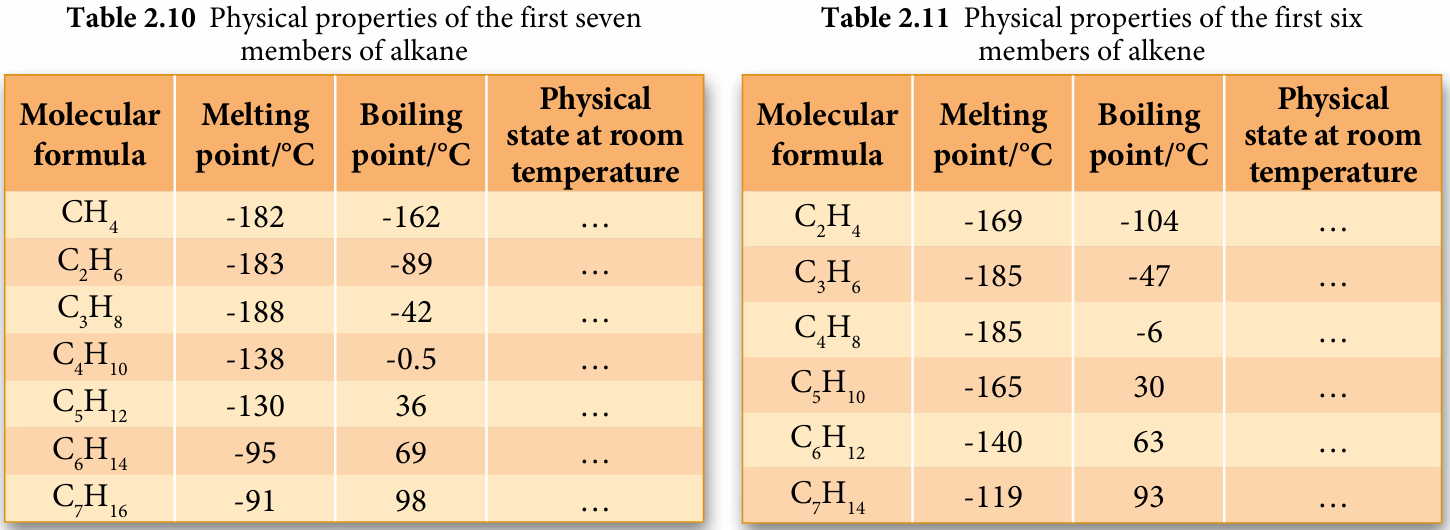
1. Complete Tables 2.10 and 2.11.
2. Based on the data in Tables 2.10 and 2.11, state and explain the three characteristics of the homologous series shown by alkane and alkene.
Present your answer in a Gallery Walk activity.
Answer:
1.
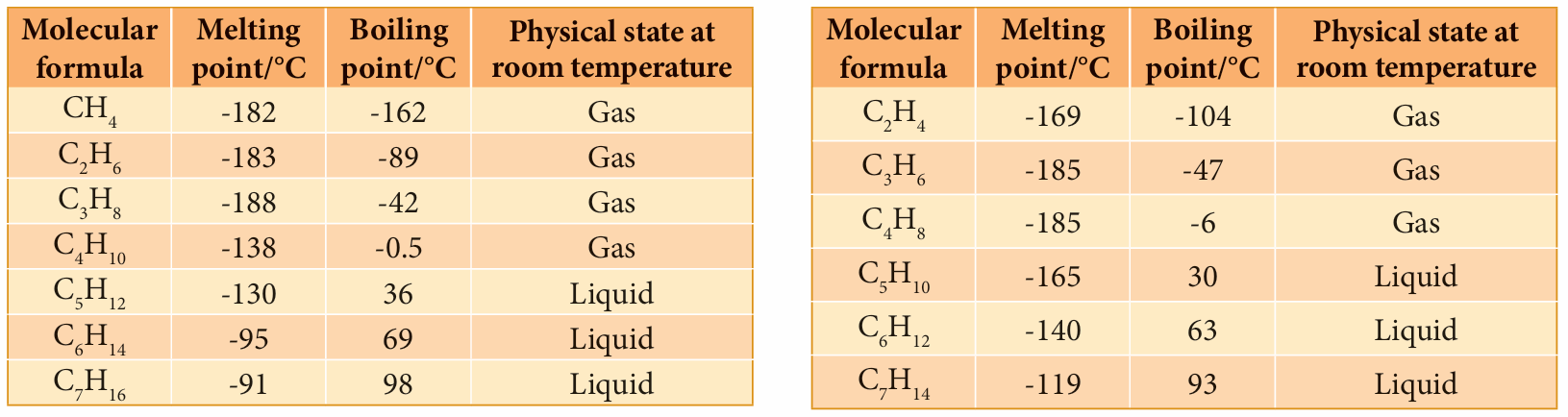
2.
(i) The members in the homologous series of alkanes and alkenes are represented by the same general formula, namely:
(a) C2H2n+2 for alkanes
(b) C2H2n for alkenes
(ii) The consecutive members in the homologous series of alkanes and alkanes differ by one carbon atom and two hydrogen atoms (CH2) or relative molecular mass = 14
(iii) The physical properties of the members of the homologous series of alkanes and alkenes gradually change from one member to the next member from gas to liquid.
You are required to conduct this activity in groups.
Table 2.10 shows the physical properties of the first seven members of alkane and Table 2.11 shows the physical properties of the first six members of alkene.

1. Complete Tables 2.10 and 2.11.
2. Based on the data in Tables 2.10 and 2.11, state and explain the three characteristics of the homologous series shown by alkane and alkene.
Present your answer in a Gallery Walk activity.
Answer:
1.

2.
(i) The members in the homologous series of alkanes and alkenes are represented by the same general formula, namely:
(a) C2H2n+2 for alkanes
(b) C2H2n for alkenes
(ii) The consecutive members in the homologous series of alkanes and alkanes differ by one carbon atom and two hydrogen atoms (CH2) or relative molecular mass = 14
(iii) The physical properties of the members of the homologous series of alkanes and alkenes gradually change from one member to the next member from gas to liquid.